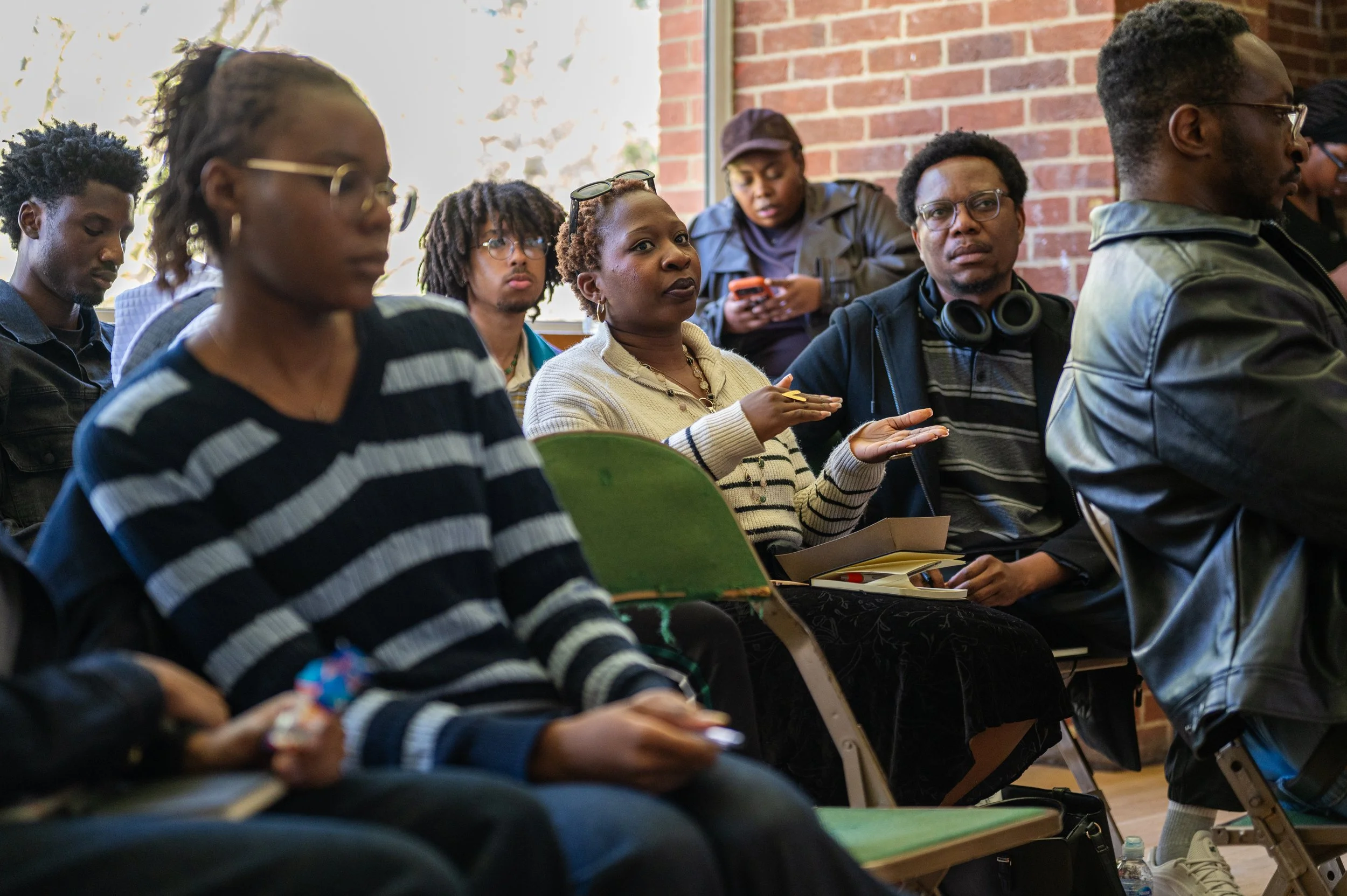
Picture a room of fifteen people.
A producer from a production company you admire sits on a stool at the front. Halfway through, someone at the back asks the question they'd never type into a webinar chat: "How did you get paid when you were starting out?"
The answer is honest. The room relaxes.
And by the end of the hour, at least one person has decided to send the email they've been putting off for months. We've hosted that room, in one form or another, almost a hundred times since 2019.
Across seven years and more than 1,000 creatives, one thing comes up again and again: confidence comes before progression.
Talent is rarely the barrier. Knowing that you belong, who to ask and what to do next usually is.
The confidence gap is getting wider
This matters more now than it did five years ago. Creative Access, which surveys under-represented creatives every year, found that career optimism fell from 66% to 31% between 2022 and 2025. That is a sharp drop in a short time, set against production downturns, job insecurity and rising costs.
Their latest report has a more hopeful finding too. Creatives who received structured support were far more likely to move forward: 65% of them progressed in the past year, against nearly half of all respondents.
Support changes outcomes. The question is what kind.
What we've seen in seven years of small rooms
Our impact reports tell a consistent story:
89% of 2025 participants in our masterclasses, secret sessions and programmes reported higher career confidence. 85% rated the content as highly actionable.
100% of participants on our UAL Creative Shift programme said it built their confidence and gave them clear next steps.
On Beats Academy, the share of 16 to 20-year-olds who would consider a career in marketing rose from 62% to 91% in three days.
None of those sessions were large. Our masterclasses cap at about 15 to 30 people. Our secret sessions are smaller still.
That is on purpose.
“"The smaller groups made the experience more intimate and more engaging.”
Masterclass attendee, 2020
Why small, honest rooms work
1. They give permission to ask
The questions that unlock careers are often the ones people feel they shouldn't ask. “How much should I charge? Who do I email? Is it normal to feel like this?” In a small room with an industry professional who is open about their own path, those questions get asked and answered.
2. They make the path visible
Seeing someone with a similar background doing the job you want changes what feels possible. Our members tell us this every year. It is why we put working professionals at the front of the room, not motivational speakers.
3. They end with a next step
Every session we run is designed to leave people with something to do the following morning. That is where "highly actionable" comes from. Confidence without a next step fades; however confidence with an actionable steps turns into an application, a pitch or a first credit.
What this means for your organisation
If you run an early-careers scheme, a university programme or a talent initiative, here are three changes that make a difference:
Measure confidence, not just attendance.
Ask before and after: how confident do you feel about your next step? Do you know what it is? Those two questions tell you more than a headcount.Design small.
Swap one large panel for three intimate sessions. You will reach fewer people per session and change far more of them.Bring your people, not your logo.
A senior producer, a creative director or a head of talent who will be honest for an hour is worth more than any branded event.
How we can help
Spending seven years refining this format with partners including Somesuch, UAL, Apple Beats, WePresent, the Film & TV Charity and many more. There are two ways to bring it into your organisation:
Programme design and impact evaluation: for universities, funders and industry bodies who want programmes that build confidence and can prove it. We'll help you design the format, set the right measures and report on what changed.
The Partner package: for employers and brands. You host a masterclass, portfolio review, mixer or showcase with our community.
Want to talk it through?
Email info@thekusp.co.uk with the subject; "Consultancy enquiry", or request our partnership pack.
This post is part of our Retention & Progression series, drawn from seven years of The Kusp impact reports and the latest industry research.